
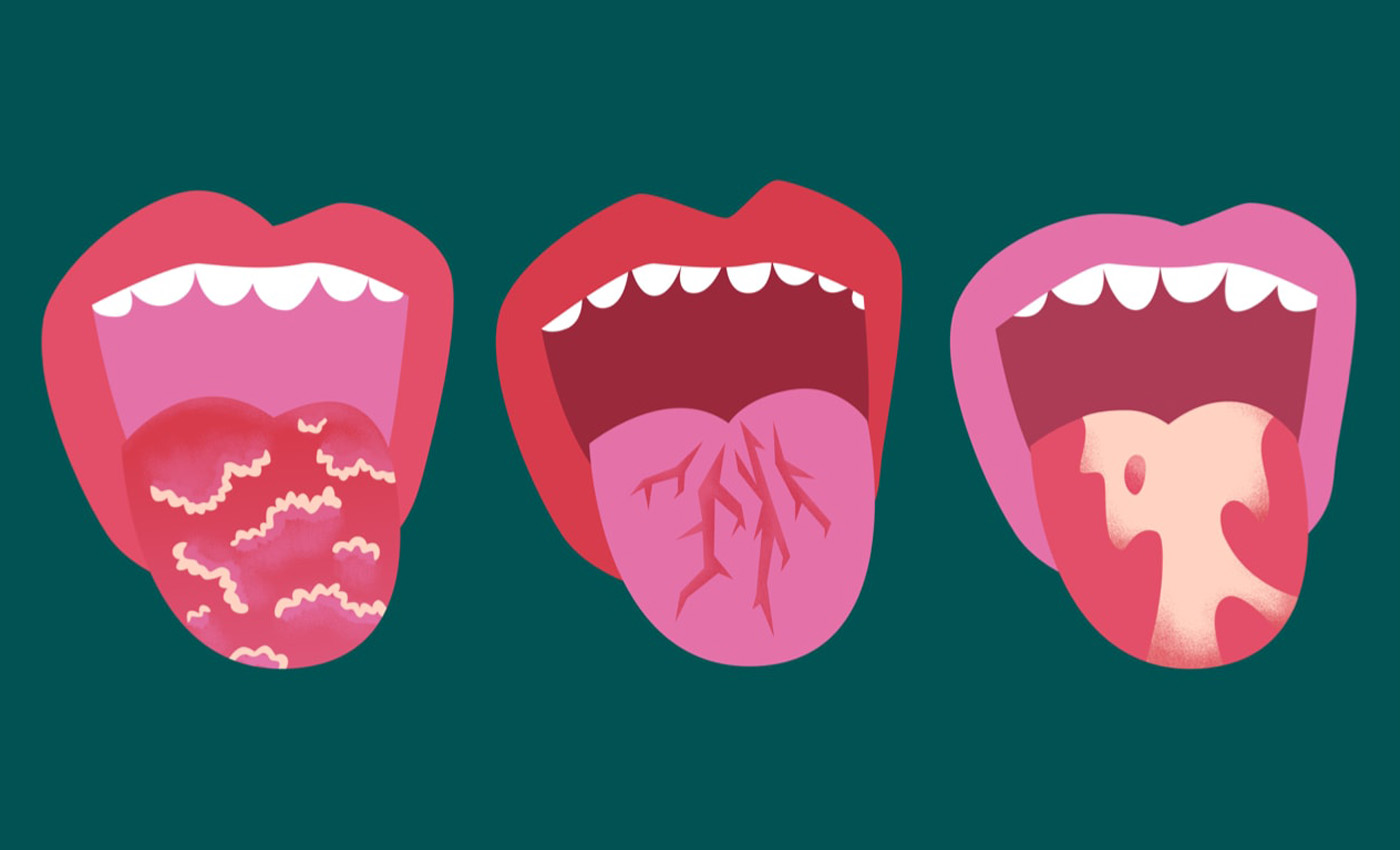
Are cracks developing on your Tongue due to Oral Psoriasis ?
Introduction to Oral Psoriasis:
Many people think of Psoriasis as a skin disease that appears on visible areas of the body, such as the elbows or knees or scalp. However, signs of this disease may appear in unexpected ways, such as inside your mouth.
It’s known as oral Psoriasis if this is the case. It isn’t a major medical issue, but it may be inconvenient. And getting the right diagnosis can be difficult. What is the reason for this? It’s so uncommon that most physicians have never heard of it, and some aren’t even sure it exists.
What Are the Signs and Symptoms associated to Oral Psoriasis?
It can be difficult to determine whether you have oral Psoriasis. The symptoms are usually mild and pass quickly. Doctors can’t even agree on the full list of symptoms.
Experts believe that while signs can occur in a variety of places in your mouth, they’re most common on the inside of your cheeks. You may have noticed:
Red skin patches with yellow or white edges
A sore throat
Gums that are peeling
Pus-filled blisters (pustules)
When eating spicy foods, you can experience pain or burning.
Changes in the flavor of things
Oral Psoriasis can be related to a variety of other disorders, including:
Fissured tongue: the tongue has grooves or trenches.
Geographic tongue is characterized by red patches on the tongue that resemble islands on a map.
Gums that are swollen or tainted
People with oral Psoriasis also have skin signs as well, such as dark, scaly spots. Along with the symptoms on your skin, the symptoms in your mouth are likely to improve or worsen. If you have psoriasis signs in your mouth, you’re more likely to have skin flare-ups as well.
What is the best way to detect if you have Oral Psoriasis?
Your dentist may do the following examination-
Inquire about your (and your family’s) medical background.
Under a microscope, examine a tiny sample of skin from within your mouth.
Perform genetic testing.
Other conditions that trigger common symptoms that your doctor may want to rule out include:Infection of Candida albicans Leukoplakia is a form of leukaemia. Reiter’s syndrome is a form of lichen planus. Smoking-related problems, ill-fitting dentures, and other concerns
What’s the Plan of Action?
Since many people with oral Psoriasis aren’t affected by it, they don’t need care. However, if it hurts, you can begin with the following simple steps:
Rinse your mouth with a lukewarm water and salt solution.
When the symptoms are acting up, avoid spicy foods.
Stop smoking if you do.
Speak to your doctor if those home remedies aren’t working. Other possibilities include:
Mouth rinses that help with pain and reduce acidity in the mouth
Steroids, for example, maybe applied to sore areas in the mouth.
For serious symptoms, pills or tablets (such as cyclosporine) are prescribed.
Other types of Psoriasis:
Psoriasis plaque:
Is the most typical. This form affects about 8 out of 10 people with Psoriasis. It’s possible that your doctor would refer to it as “Psoriasis Vulgaris.”
Plaque psoriasis is characterized by elevated, inflamed, red skin that is coated in silvery, white scales. It is possible that these patches would scratch and burn. It can occur anywhere on your body, but it’s most common in the following places: knees, scalp, elbows, and lower back.
Guttate Psoriasis
This is a common form that begins in children or young adults. It occurs in less than 2% of the time.
Guttate Psoriasis is a form of Psoriasis that causes tiny pink-red spots on the skin. They always show up on your:
Thighs
Trunk
Upper Arms
Scalp
Inverse Psoriasis:
This type usually found in these locations:
Armpits
Groin
Under the breasts
Skin folds around the genitals and buttocks
Pustular Psoriasis:
This form of Psoriasis is rare and mainly affects adults. It produces pus-filled bumps (pustules) on the skin that are surrounded by redness. These may appear to be contagious, but they are not. This form of cancer may only affect one part of your body, such as your hands and feet. Psoriasis that affects the majority of the body is known as “generalized” pustular Psoriasis. When this happens, it can be very dangerous, so seek medical help as soon as possible.
Erythrodermic Psoriasis:
This is the least popular form, but it’s the most dangerous. It affects the majority of your body and causes widespread, burning burned-looking skin.
Some signs and symptoms include:
Itching, burning, or peeling that is serious
Increased heart rate
Temperature changes in the body
We hope this article was helpful to you in learning about the different types of Psoriasis, which mainly included Oral Psoriasis.








Hailey - 8 months ago