
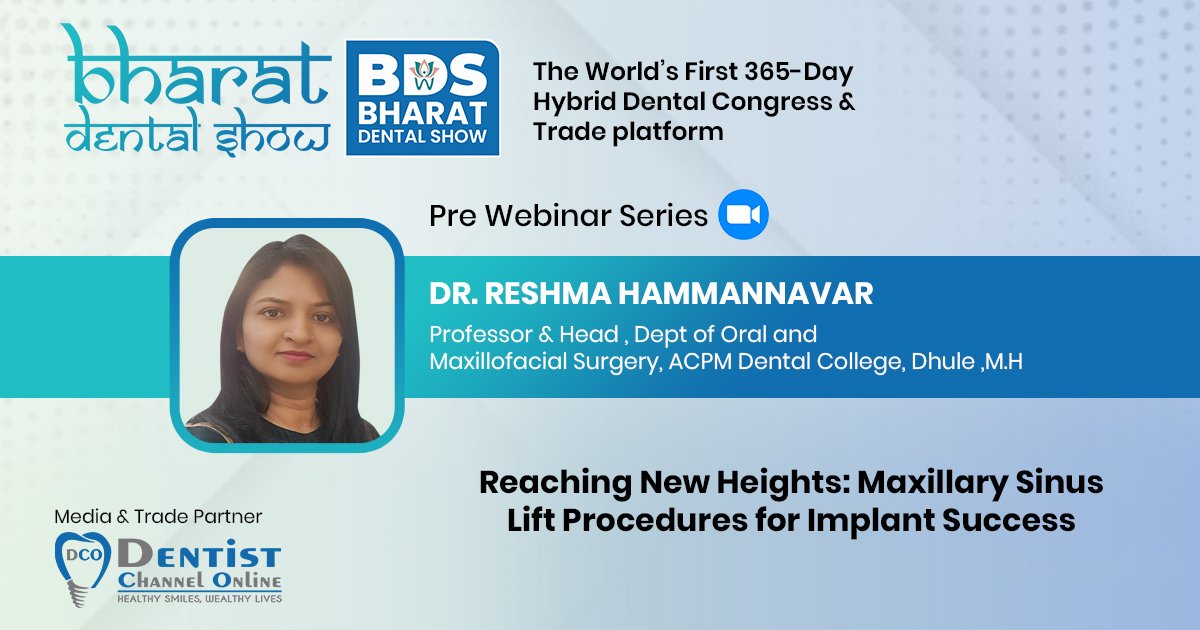
Dental implant rehabilitation in the posterior maxilla often poses a challenge due to reduced bone height resulting from alveolar bone resorption and maxillary sinus pneumatization. Maxillary sinus augmentation has become a well-established and predictable surgical procedure to overcome these limitations and facilitate successful implant placement in areas with inadequate bone volume.
This presentation provides a comprehensive overview of maxillary sinus lift procedures, focusing on both the indirect (transcrestal) and direct (lateral window) approaches. The indications, case selection criteria, surgical protocols, advantages, limitations, and clinical outcomes associated with each technique will be discussed. Particular emphasis will be placed on selecting the appropriate sinus augmentation method based on residual bone height, implant requirements, and patient-specific factors.
The presentation will also review relevant maxillary sinus anatomy, preoperative radiographic assessment, grafting materials, management of intraoperative complications such as Schneiderian membrane perforation, and postoperative considerations. Contemporary advancements in sinus augmentation, including minimally invasive techniques and the use of biologics and biomaterials, will be highlighted.
Clinical cases demonstrating both direct and indirect sinus lift procedures will be presented to illustrate treatment planning, surgical execution, and long-term implant success. By understanding the principles and applications of sinus augmentation techniques, clinicians can expand treatment possibilities in the posterior maxilla and achieve predictable functional and esthetic implant outcomes.
Date: 22/07/2026| 07:30 PM IST














Matis - 1 month ago