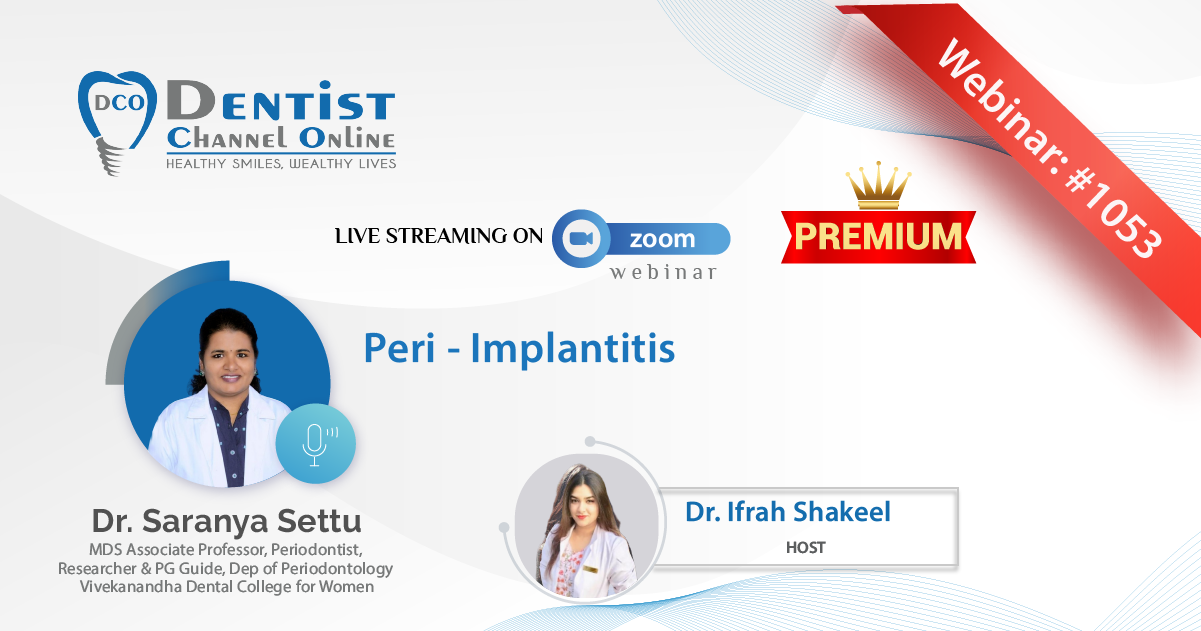
Certificate of participation with 1 CME is available
Peri-implantitis is a chronic inflammatory condition affecting the soft and hard tissues surrounding dental implants, leading to progressive bone loss and potential implant failure. It is considered the biological complication of dental implant therapy, sharing similarities with periodontitis but exhibiting a more aggressive course once established. The condition is typically initiated by microbial biofilm accumulation around the implant surface, which triggers a host immune response. This inflammatory reaction, if not controlled, results in the destruction of peri-implant bone. Risk factors for peri-implantitis include a history of periodontitis, poor oral hygiene, smoking, systemic conditions such as diabetes, and improper prosthetic design or implant placement. Clinically, peri-implantitis presents with signs such as bleeding on probing, suppuration, increased probing depth, and radiographic evidence of bone loss. Early diagnosis and intervention are critical for preventing implant loss. Management strategies include mechanical debridement, antiseptic or antibiotic therapy, laser treatment, and surgical intervention for regenerative or resective purposes. Recent research is focused on understanding host-microbial interactions, implant surface modifications, and advanced regenerative materials. Given the increasing prevalence of dental implants worldwide, the prevention and management of peri-implantitis have become paramount for ensuring long-term implant success and patient satisfaction.
Highlights
"Peri-implantitis – A Growing Concern in Implant Dentistry"
* Introduction to Peri-implant Diseases
Differentiation between mucositis and peri-implantitis
Epidemiology and prevalence of peri-implantitis
* Etiology and Risk Factors
Role of bacterial biofilm and host immune response
Influence of systemic factors (diabetes, smoking)
Iatrogenic and prosthetic-related factors
* Clinical and Radiographic Diagnosis
Key clinical signs: bleeding on probing, suppuration, pocket depth
Importance of baseline data and radiographic comparison
* Current Classification and Staging
Peri-implant disease classification (AAP 2017 & beyond)
* Management Strategies
Non-surgical therapy: mechanical debridement, antiseptics, lasers
Surgical treatment: resective vs. regenerative techniques
Role of biomaterials and implant surface decontamination
* Recent Advances and Future Directions
Emerging technologies: photodynamic therapy, probiotics, host modulation
Strategies for prevention and maintenance protocols
* Clinical Case Discussions
Real-life cases highlighting diagnostic and treatment challenges
Interactive Q&A Session
Date: 07/09/2025 |07:00 PM IST