
• Dentist Channel Online Dentist Channel Online
  • 29 September, 2021

Access Cavity Preparation in Endodontics - An Overview

Access opening - A quick notes

It is the first step in root canal treatment of a teeth. Let us know various types of access opening methods / approaches. The access cavity preparation generally refers to the part of the cavity from the occlusal table to the canal orifices.

Objectives

  • To remove all caries 
  • To conserve sound tooth structure 
  • To completely unroof the pulp chamber 
  • To remove all coronal pulp tissue (vital or necrotic) 
  • To locate all root canal orifices 
  • To achieve straight- or direct-line access to the apical foramen or to the initial curvature of the canal 
  • To establish restorative margins to minimize marginal leakage of the restored tooth 
  • Visualization of the Likely Internal Anatomy 
  • Determination of the point of penetration 
  • Assessment of occlusal and external root form 
  • Radiographic measurement of the depth of the pulp chamber roof from the occlusal table 
  • Assessment of complicating factors 
  • Radiographic assessment 
  • Evaluation of the Cementoenamel Junction and Occlusal Anatomies 

Guidelines

  • Preparation of the Access Cavity Through the Lingual and Occlusal Surfaces 
  • Removal of All Defective Restorations and Caries Before Entry Into the Pulp Chamber 
  • Removal of Unsupported Tooth Structure 
  • Creation of Access Cavity Walls That Do Not Restrict Straight- or Direct-line Passage of Instruments to the Apical Foramen or Initial Canal Curvature 
  • Delay of Dental Dam Placement Until Difficult Canals Have Been Located and Confirmed 
  • Location, Flaring, and Exploration of All Root Canal Orifices 
  • Inspection of the Pulp Chamber, Using Magnification and Adequate Illumination 
  • Tapering of Cavity Walls and Evaluation of Space Adequacy for a Coronal Seal 

Newer designs of access cavity preparation

  • Conservative endodontic access cavity  
  • Ultra conservative access cavity / ‘Ninja'
  • Orifice – directed dentin conservation access cavity / Truss
  • Caries driven
  • Restorative driven 
  • Cala lilly enamel preparation 
  • Image guided endodontic access 
  • Dynamically guided endodontic access 
  • Micro guided endodontic access 

Conservative access cavity

  • By David Clark and John Khademi 
  • Lessen the tooth structure removal 
  • Helps the long time survival & function of root canal treated tooth 
  • Here, the teeth are accessed at the central fossa and they are extended out to discover canal orifices. This aids in protecting the pericervical dentin and a part of the chamber floor 


Ultra conservative access cavity/ Ninja method

  • Here, an oblique projection is made towards the central fossa of the root canal orifices 
  • This projection is made parallel with the enamel cut of 90 degree or more to the occlusal plane 
  • This makes simpler to discover the canal orifices from different visual angulations 
  • Limited line of vision, incomplete removal of infected pulpal tissue is the main limitation leading to failure of endodontic treatment 

Orifice- Directed Dentin Conservation Access Cavity / ‘Truss’

  • Separate cavities are made to approach the canals 
  • The point of this methodology is to preserve dentin with the minimally invasive approach i.e. leaving a truss of dentin between the two cavities that have been prepared 
  • The restricting components of this methodology which are past the operator’s control are position of tooth, patients mouth opening capability, degree of calcification & other patient related variables 

Caries driven 

Entry into the pulp chamber is carried out by extracting caries and maintaining all the remaining structure of the tooth 

Cala lilly enamel preparation

  • Usually, unfavourable C factor and weak enamel rod engagement are present when eliminating old amalgam or composite restoration or with the traditional endodontic access cavity 
  • Enamel in the form of cala lilly is cut back at 45 

Dynamically Guided Endodontic Access

  • Dr. Charles M introduced it for the first time for implants 
  • CBCT is used to design an access cavity 
  • Overhead cameras are used to trace the location of patients jaw and clinicians bur in three dimensional space 
  • After looking at the software interface, the clinician provides input about the bur location 

Article by: Dr. Siri P.B.


Categories:
Tags :
Comments :
Hailey Avatar
Hailey - 1 year ago
My name is Hailey Garcia and I am from New Jersey. My herpes virus turned to war after 2 years of living with it. I have tried different medical procedures to cure my herpes but to no avail. Most people think herpes is only a minor skin irritation of which herpes has long term effects on health and passes through the bloodstream and can be easily contracted through sexual intercourse. I knew I had herpes from the first day I started feeling itchy in my pubic area and the pain was very unbearable. I couldn't stand it anymore. After 2 years of trying other means to get rid of it, I had to contact Doctor Odunga to help me with a permanent cure. I saw his email and whats-app number from a testimony I read online from a lady who was also helped by him in curing infertility problems, I had faith and contacted him. He assured me of his work and I ordered his herbal medicine. Within 5 days, I didn't feel any pain anymore and within 2 weeks, my skin was all cleared and smooth. I am very grateful to you sir and I write this testimony as others have done to bring those having faith to you sir. If you have herpes or other similar disease and you want it cured, kindly contact Doctor Odunga, Whats-App (wa.me/+2348167159012) OR Email [email protected]

Authentication required

You must log in to post a comment.

Log in

Upcoming webinars:

  • 29 May,2026
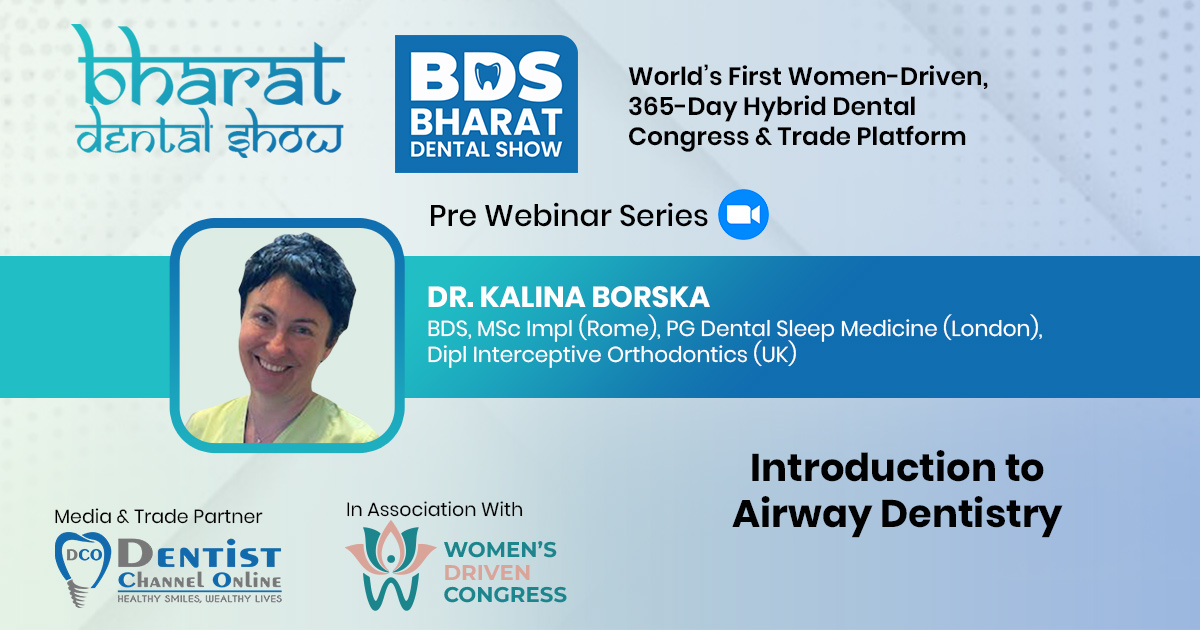
Introduction to Airway Dentistry

Explore the fundamentals of airway-focused dentistry and its role in breathing, sleep, and overall oral health.

  • 31 May,2026
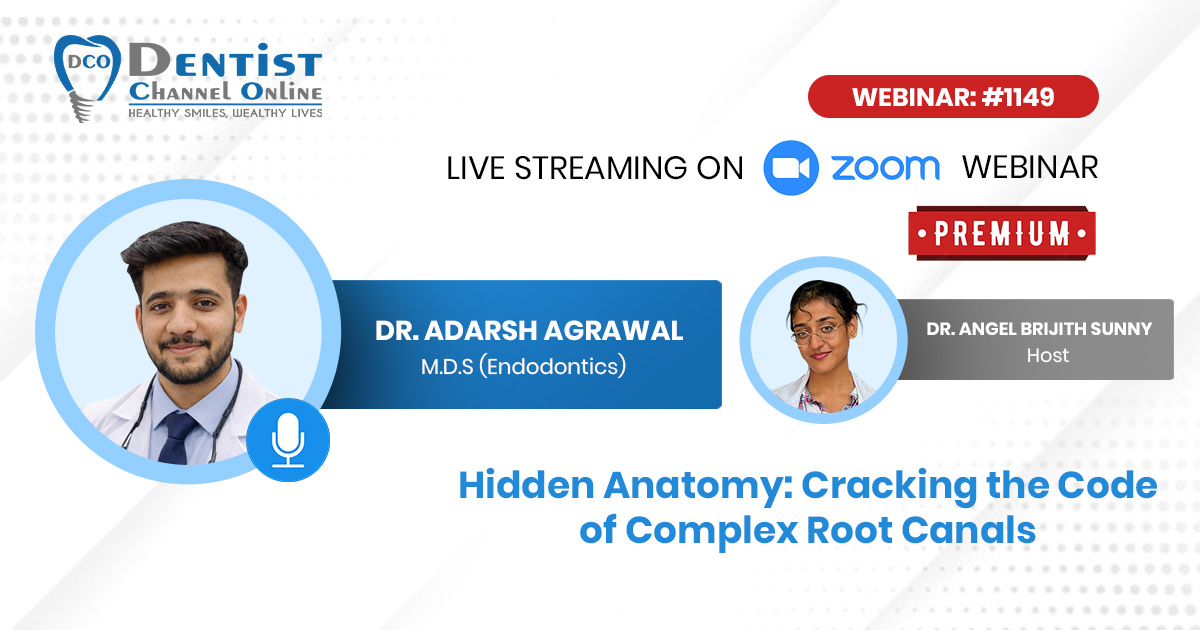
Hidden Anatomy: Cracking the Code of Complex Root Canals

Master the identification and management of hidden anatomical variations in root canals to improve endodontic success and avoid missed canals.

  • 3 June,2026
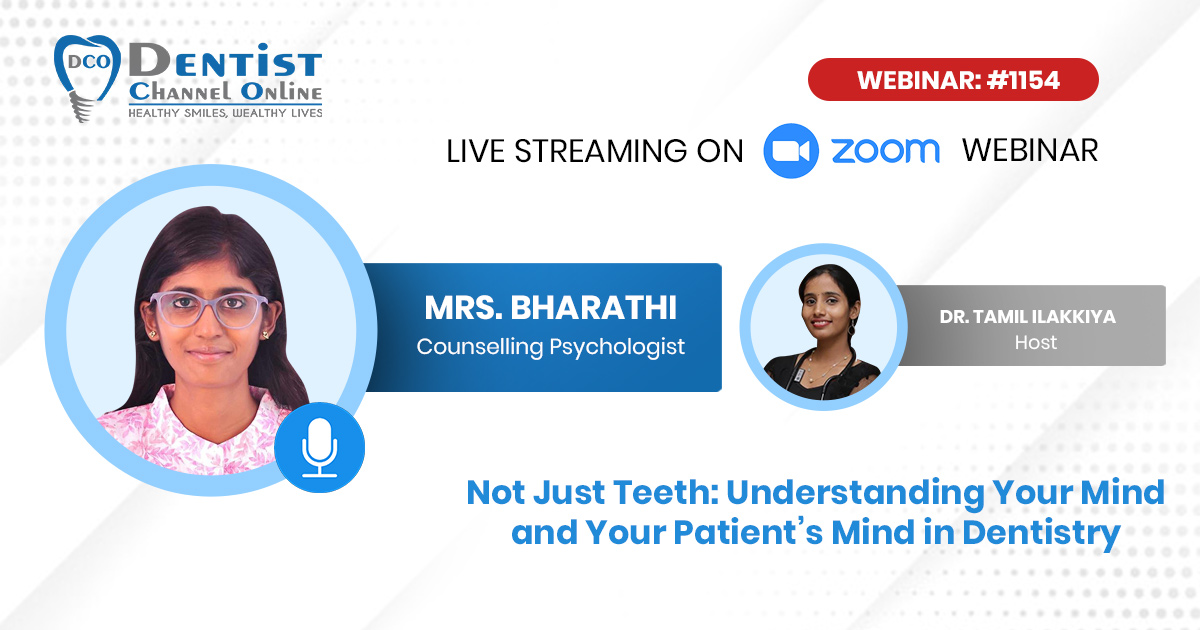
Not Just Teeth: Understanding Your Mind and Your Patient’s Mind in Dentistry

Explore the psychology behind dental practice to better understand your own mindset and improve patient communication, trust, and treatment acceptance.

  • 6 June,2026
Orofacial Pain & TMD: From Ambiguity to Accuracy

Advanced insights into diagnosing and managing temporomandibular disorders and orofacial pain with a focus on clinical accuracy and evidence-based care.

  • 10 June,2026
Building Resilience and Wellbeing in Modern Dental Practice

Building resilience and wellbeing strategies for modern dental professionals to manage stress, prevent burnout, and achieve a balanced clinical practice.

  • 12 June,2026
Taming the TMJ

Master TMJ management with expert insights on diagnosis, treatment planning, and advanced clinical approaches for temporomandibular disorders.

  • 15 June,2026
FMR: Restoring Function and Aesthetics

Advanced FMR session on Restoring function and aesthetics in complex Dental Cases.

  • 17 June,2026
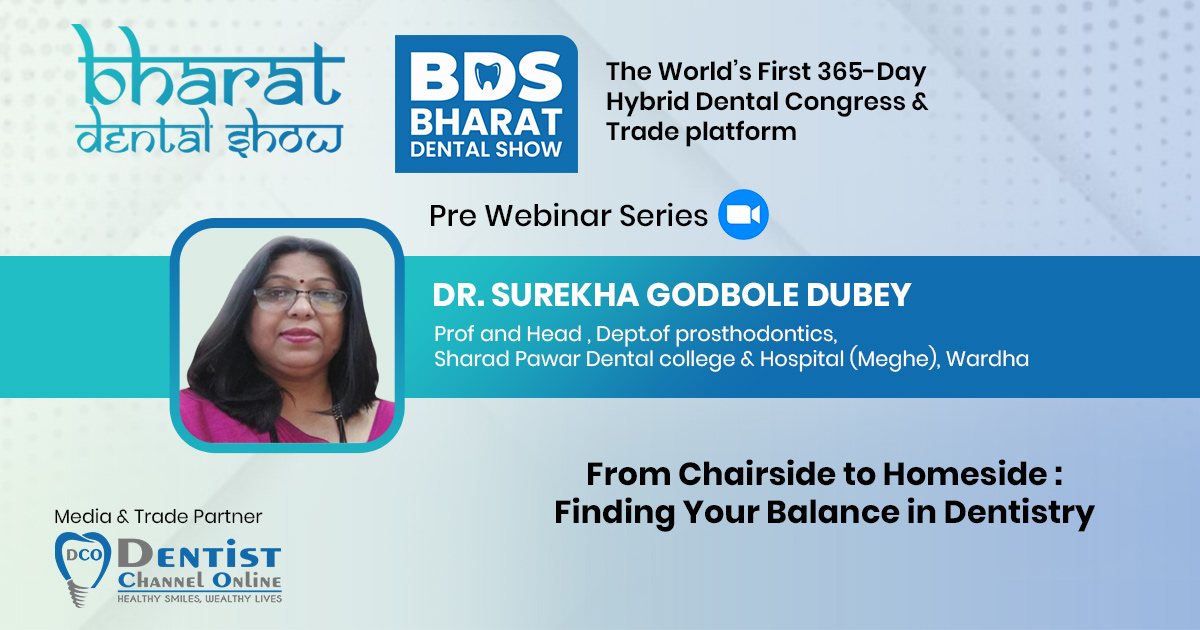
From Chairside to Homeside : Finding Your Balance in Dentistry

Discover how to achieve a healthier work-life balance in dentistry by managing clinical practice, personal wellness, and life beyond the dental chair.